
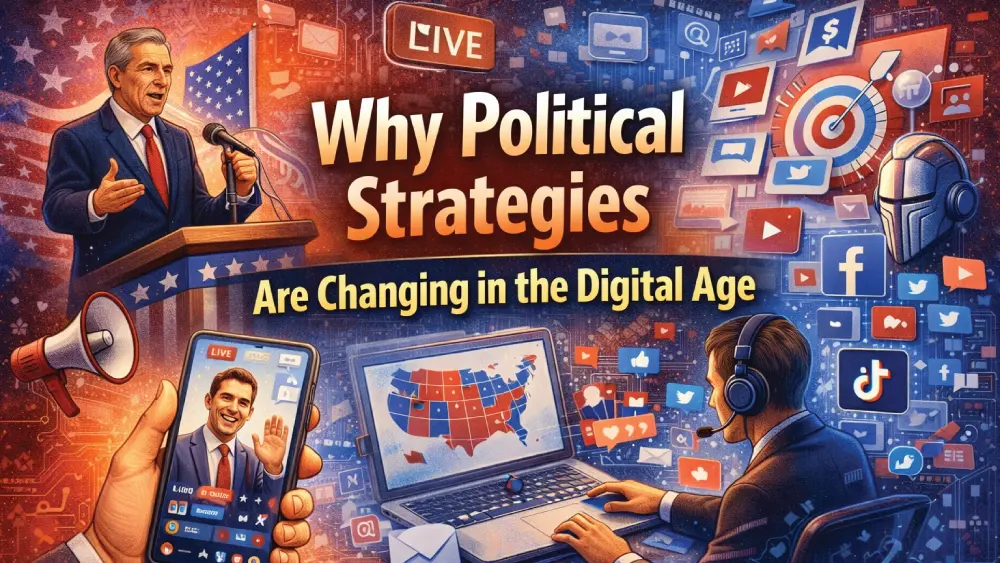
The world of politics is undergoing a dramatic transformation. Gone are the days when political campaigns relied solely on rallies, posters, and television advertisements. Today, the digital age has revolutionized how political parties connect with voters, shape narratives, and influence public opinion. In this era of smartphones, social media platforms, and artificial intelligence, political strategies are evolving at an unprecedented pace. As highlighted by Daily Political View, understanding these changes is essential for both voters and policymakers to navigate modern democracy effectively.
The Shift from Traditional to Digital Politics
Traditional political campaigning focused on physical outreach-door-to-door canvassing, mass rallies, and print media. While these methods still exist, they are no longer sufficient.
Digital platforms have become the new battleground. Political messaging now reaches audiences instantly through social media, websites, and messaging apps. Campaigns are no longer limited by geography-they are global, real-time, and interactive.
Research shows that digital media has become central to political persuasion, with platforms like Facebook, YouTube, and WhatsApp playing a crucial role in shaping voter opinions.
Key Drivers Behind Changing Political Strategies
1. Digital Connectivity
With billions of internet users worldwide, political campaigns now have direct access to voters. This connectivity allows for immediate communication and feedback.
2. Changing Voter Behavior
Younger generations consume most of their information online. Studies indicate that Gen Z and millennials spend hours daily on digital platforms, making social media a critical political space.
3. Real-Time Communication
Digital platforms enable instant responses to political events, allowing parties to adapt strategies quickly and remain relevant.
Role of Social Media in Modern Campaigns
Social media has become the backbone of modern political strategies. It enables:
- Direct communication with voters
- Viral content creation
- Real-time engagement
- Narrative control
Platforms like Instagram, TikTok, and X (formerly Twitter) are now used to share short, impactful content that resonates with audiences.
Political messaging has shifted from long speeches to short-form videos and memes, making it more engaging and shareable.
Additionally, viral content can influence public opinion significantly, often resurfacing over time and maintaining relevance.
Data Analytics and Micro-Targeting
One of the most significant changes in political strategy is the use of data analytics.
Campaigns now use:
- Voter demographics
- Social media behavior
- Consumer data
- Past voting patterns
This data helps create highly personalized messages for different voter groups-a process known as micro-targeting.
Advanced analytics tools allow campaigns to predict voter preferences and optimize their strategies accordingly.
Influence of AI and Emerging Technologies
Artificial Intelligence (AI) is reshaping political campaigns in powerful ways.
Recent developments show that:
- AI-generated content is being used in campaigns
- Personalized messaging is becoming more precise
- Chatbots and automation enhance voter interaction
In some elections, AI has been used to recreate voices and personalities of past leaders to connect emotionally with voters.
However, AI also raises concerns about misinformation and ethical use, as manipulated content can mislead voters.
Rise of Influencers and Digital Communities
Influencers are now key players in political campaigns. They help:
- Reach niche audiences
- Build trust among followers
- Simplify complex political issues
Studies suggest that social media creators can significantly shape political opinions and even influence voting behavior, often more effectively than traditional media.
Online communities, including forums and niche groups, have also become important spaces for political discussion and mobilization.
Challenges in the Digital Political Landscape
While digital transformation offers many benefits, it also presents serious challenges:
1. Misinformation and Fake News
False information spreads quickly online, affecting public perception and decision-making.
2. Polarization
Algorithms often create echo chambers, reinforcing existing beliefs and increasing political divisions.
3. Data Privacy Concerns
The use of personal data in campaigns raises ethical and legal questions.
4. Over-Saturation of Content
With constant information flow, capturing voter attention has become more difficult.
Recent reports highlight how digital misinformation campaigns can influence political narratives and even international conflicts.
The Future of Political Strategies
The future of political strategies will likely be even more digital and data-driven. Key trends include:
- Increased use of AI and automation
- Greater reliance on influencers
- Enhanced voter targeting
- Integration of virtual and augmented reality
Hybrid strategies combining digital tools with traditional grassroots methods are expected to dominate, ensuring both reach and authenticity.
Political campaigns will continue to evolve as technology advances, making adaptability the key to success.
Conclusion
Political strategies are changing rapidly in the digital age due to advancements in technology, shifting voter behavior, and the rise of social media. Campaigns are becoming more personalized, data-driven, and interactive than ever before.
While these changes offer new opportunities for engagement and outreach, they also bring challenges such as misinformation and ethical concerns.
As highlighted on Daily Political View, understanding these evolving political dynamics is essential for staying informed in today’s fast-paced digital world.
FAQs
Why are political strategies shifting to digital platforms?
Because most voters now consume information online, making digital platforms more effective for outreach and engagement.
How does social media influence political campaigns?
Social media allows direct communication, viral messaging, and real-time engagement, significantly impacting voter opinions.
What is micro-targeting in politics?
Micro-targeting involves using data to deliver personalized political messages to specific voter groups.
What role does AI play in modern political strategies?
AI helps in data analysis, content creation, and targeted communication but also raises concerns about misinformation.
Are traditional political campaigns still relevant?
Yes, but they are now combined with digital strategies for better effectiveness.
What are the risks of digital political campaigns?
Major risks include misinformation, data privacy issues, and increased political polarization.


