
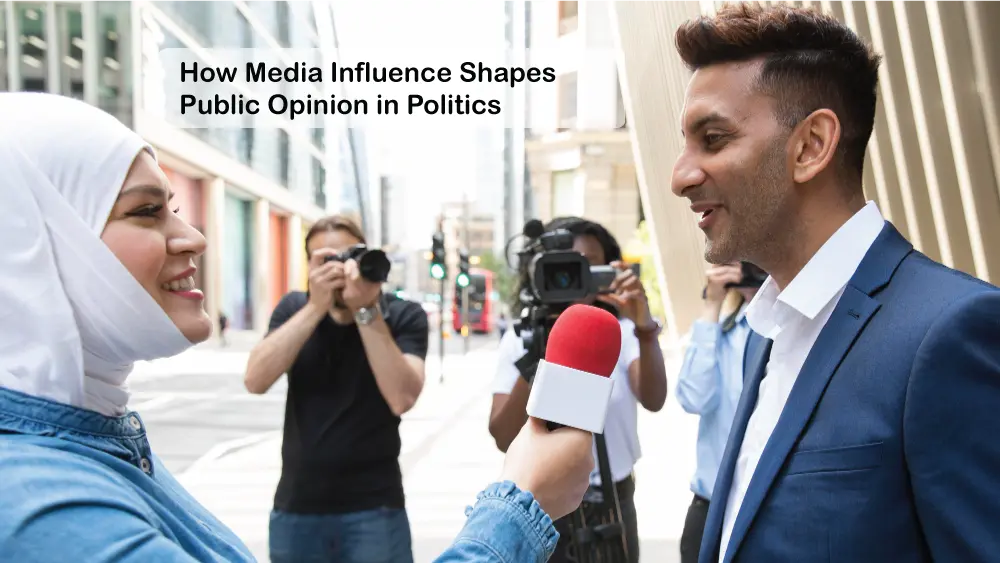
In today’s hyper-connected world, media is no longer just a channel of information-it is a powerful force that actively shapes how people think, feel, and act politically. From traditional newspapers and television to social media platforms and AI-driven content, media plays a central role in influencing public opinion and ultimately impacting democratic outcomes. This in-depth analysis explores how media shapes political perceptions, the mechanisms behind its influence, and what it means for the future of democracy.
Media and Public Opinion
Public opinion forms the backbone of democratic societies. It influences elections, policymaking, and governance. Media acts as the bridge between citizens and political institutions, shaping how people interpret political events and issues.
Research shows that media does not just inform-it frames reality. It determines which issues people consider important and how they perceive them.
In modern political analysis, understanding media influence is essential because it directly impacts voter behavior and democratic participation.
Evolution of Media in Politics
Traditional Media Era
In the early 20th century, newspapers and radio were dominant. These platforms controlled political narratives and served as primary information sources.
Television Age
Television revolutionized political communication by combining visuals with storytelling, making politics more accessible and emotional.
Digital and Social Media Era
Today, social media platforms have decentralized information flow. Anyone can create and share political content, making influence more widespread and unpredictable.
According to studies, social media has become a critical driver of opinion formation, blending peer influence with mainstream media narratives.
Key Theories Explaining Media Influence
Agenda-Setting Theory
Media doesn’t tell people what to think-but what to think about. By highlighting certain issues, media sets the public agenda.
Framing Theory
The way media presents a story influences interpretation. For example, labeling a protest as “peaceful” vs. “violent” changes perception.
Priming
Media exposure affects how people evaluate political leaders and policies.
Spiral of Silence
People tend to remain silent if they believe their opinion is in the minority, reinforcing dominant narratives.
These theories highlight that media influence is subtle yet powerful in shaping political realities.
Mechanisms Through Which Media Shapes Opinion
1. Information Selection (Gatekeeping)
Media decides which news stories to publish, shaping public awareness.
2. Repetition and Reinforcement
Repeated exposure to certain narratives strengthens beliefs.
3. Emotional Appeal
Media often uses fear, hope, or anger to influence political attitudes.
4. Visual Framing
Images and videos can create stronger impressions than text alone.
Mass media and digital platforms can even “activate” existing attitudes, motivating individuals to take political action such as voting or campaigning.
Role of Social Media and Digital Platforms
Social media has transformed political communication in several ways:
- User-generated content: Anyone can influence political discourse
- Algorithm-driven feeds: Content is personalized, reinforcing beliefs
- Virality: Information spreads rapidly, often without verification
Recent discussions highlight how digital platforms have fragmented shared reality, leading to echo chambers and misinformation.
At the same time, social media has empowered younger audiences to engage more actively in politics, making it more participatory.
Media Bias, Misinformation, and Polarization
One of the biggest challenges in modern political analysis is media bias.
Types of Media Bias:
- Political bias (left vs. right)
- Corporate influence
- Sensationalism
Media outlets often reinforce existing beliefs rather than challenge them, contributing to polarization.
Misinformation further complicates the issue:
- Fake news spreads faster than factual content
- Deepfakes and AI-generated media increase manipulation risks
- Selective reporting distorts public understanding
Case Studies and Real-World Examples
Example 1: Media Narratives and Public Perception
Recent studies show how media narratives can create a gap between actual public opinion and perceived opinion, especially on policy issues like climate change.
Example 2: Influence on International Perceptions
Research analyzing news coverage found that media reporting can significantly shape public opinion about countries, explaining large variations in perception over time.
Example 3: Political Campaign Strategies
Politicians increasingly adapt their strategies based on media visibility, highlighting the perceived power of media in shaping success.
Impact on Elections and Policy-Making
Media plays a decisive role in elections:
- Influencing voter preferences
- Highlighting key issues
- Shaping candidate image
Political leaders also respond to media narratives when making decisions, demonstrating a strong link between media coverage and policy outcomes.
In many cases, media pressure can accelerate policy changes or force governments to address public concerns.
The Importance of Media Literacy
In an age of information overload, media literacy is more important than ever.
Why Media Literacy Matters:
- Helps individuals identify bias
- Encourages critical thinking
- Reduces susceptibility to misinformation
Experts emphasize that ethical journalism and informed audiences are essential for maintaining democratic integrity.
Future Trends in Political Media Influence
1. AI and Political Communication
Artificial intelligence is reshaping how political content is created and consumed.
2. Rise of Independent Media
Alternative platforms and creators are challenging traditional media dominance.
3. Increased Regulation
Governments may introduce stricter rules to control misinformation and ensure transparency.
4. Data-Driven Campaigns
Political campaigns will increasingly rely on data analytics to target voters more effectively.
The future of political media will depend on balancing innovation with ethical responsibility.
Conclusion
Media influence on public opinion is one of the most significant forces shaping modern politics. It determines what issues matter, how they are understood, and how people respond.
As highlighted throughout this analysis, media operates through complex mechanisms such as framing, agenda-setting, and emotional appeal. While it empowers democratic participation, it also poses risks like misinformation and polarization.
For readers of Daily Political View, understanding these dynamics is crucial to navigating today’s ever-evolving political landscape. A well-informed public is the cornerstone of a healthy democracy, and media literacy is the key to achieving it.
FAQs
How does media influence political opinions?
Media shapes opinions by selecting topics, framing narratives, and repeatedly exposing audiences to specific viewpoints.
What is agenda-setting in media?
Agenda-setting refers to the media’s ability to influence which issues people consider important.
Does social media have more influence than traditional media?
Social media has greater reach and speed, but both traditional and digital media play significant roles.
What is media bias?
Media bias occurs when news coverage favors a particular political perspective or agenda.
How can people avoid media manipulation?
By practicing media literacy, verifying sources, and consuming diverse viewpoints.
Why is media important in democracy?
Media informs citizens, holds leaders accountable, and shapes public discourse, making it essential for democratic functioning.


